
تشخيص الأعطال
أصوات واهتزاز محرك الغسالة: ماذا يعني كل صوت
الصوت هو أكثر عطل الغسالة تشخيصاً. تعرف على معنى كل نوع صوت وطريقة الفحص الميداني البسيط لكل سبب.
Listen Before You Disassemble
A washing machine motor tells you what is wrong through sound, and each failure mode has a distinct acoustic signature. Technicians who learn to classify the noise first spend far less time on disassembly and misdiagnosis.
Run the washer through its cycle and note when the noise occurs: during wash agitation only, during spin only, or continuously. Wash-only noise points to the transmission and agitator; spin-only noise points to bearings or the spin motor; continuous noise follows the motor itself. Then match the sound type to the causes below.
Grinding or Rumbling: Bearing Wear
A deep, continuous grinding or rumble that grows louder over weeks is the classic sound of worn drum or motor bearings. The rolling elements have lost their grease or developed surface damage, and metal is now contacting metal.
Confirm it with the machine off: remove the belt and rotate the drum by hand. Roughness, crunching, or heavy spots under your hand confirm bearing damage. If the sound comes from the motor itself rather than the drum, spin the bare motor shaft by hand; any gritty resistance means the motor's own bearings are done. Motor bearing replacement is possible, but for cost reasons, most service shops replace the motor at that point, since bearings and labor approach a replacement's price.
Loud Hum That Is Louder Than Usual: Electrical or Load Issue
Every single-phase motor hums; the 50Hz magnetostriction is part of normal operation. What matters is a change. A hum that has become noticeably louder, especially combined with slower drum speed, means the motor is working harder than it should.
The usual suspects are a failing start capacitor, a dragging load from a tight belt or congested drain path, or low supply voltage. Measure voltage during the cycle and check the mechanical free movement before replacing the motor. A hum that suddenly stops along with all rotation, leaving a hot smell, is an electrical stall; disconnect power immediately and test the windings.
Knocking or Thumping: Mechanical Looseness
A rhythmic knock that follows drum rotation usually means something mechanical is out of balance or loose: an unbalanced load, a worn drum spider, a loose pulley, or mounting bolts that have backed out of the motor base.
Check the simple things first: rebalance the load and inspect the motor mounting bolts and pulley setscrews. A knock that persists with an empty drum and tight fasteners points to the transmission or drum support structure. Continue running a machine with a structural knock and the vibration will damage bearings and windings as collateral.
Squealing or Chirping: Belt and Pulley Problems
A high-pitched squeal during spin is almost always the drive belt slipping on the pulley. The belt has either stretched, glazed, or picked up grease. Squealing at the very start of a spin cycle that fades away is the belt slipping until the drum reaches speed; it will return worse each month.
Inspect the belt for glazing and cracks, check tension, and verify the pulleys are aligned in the same plane. Belt replacement is cheap, but use the exact profile and length, and never apply belt dressing spray as a permanent fix, it only masks the problem for a few weeks.
Rattling or Buzzing: Loose Cores or Foreign Objects
A buzzing rattle from inside the motor can mean loose laminations or a loose centrifugal switch component. A rattle from the cabinet is more often a foreign object, coins, wire bra clips, caught between drum and tub.
For motor-internal rattles, the decision is straightforward: a motor with loose core laminations will continue to degrade, and replacement is more sensible than rebuild at washer-motor price points. For suspected foreign objects, inspect the tub and drum gap before any motor work.
Why Motor Build Quality Determines Long-Term Noise
Noise over a motor's life is largely determined at the factory. Dynamic balancing of the rotor, precision-machined bearing seats, and varnish-locked windings all determine whether a motor stays quiet for years or develops rattles within months.
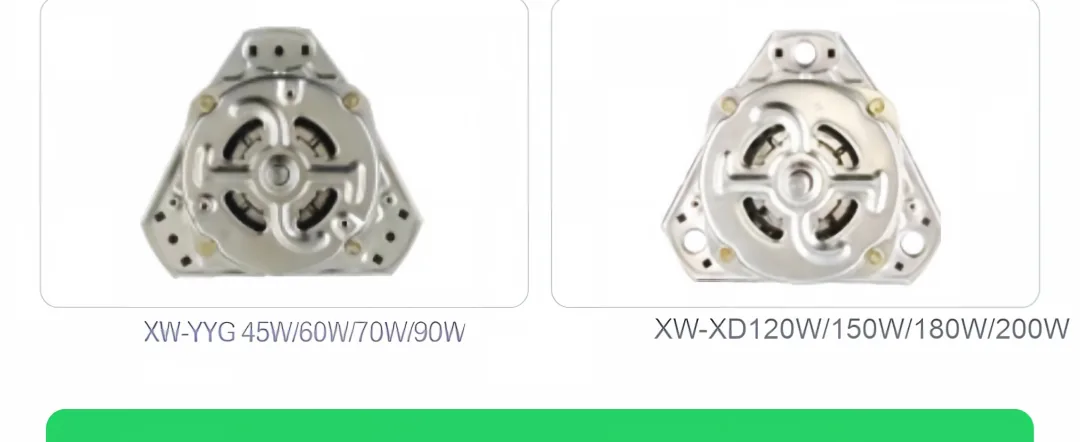
At XinWei Motor, rotors are dynamically balanced, windings are vacuum-impregnated to eliminate coil vibration, and every unit is run-tested, so the speed stays inside the 1350-1470 r/min band with stable acoustics before shipping. For buyers in the 45W-200W replacement market, consistent acoustics across a batch is one of the practical differences between a motor that generates warranty traffic and one that does not.
If noise complaints are recurring across your fleet or your sales market, send us the model details. We can match quieter copper-winding versions or adjust the mounting configuration, and our team replies with matching options within one business day.
Frequently Asked Questions
Is it normal for a washing machine motor to make some noise?
Yes. A steady low hum from the motor and water circulation sounds are normal. What signals a fault is a change: new grinding, knocking, squealing, or a hum that has become noticeably louder. Any noise that appears suddenly or grows over time deserves investigation.
My washer is loud only during the spin cycle. What should I check first?
Spin-only noise points to the spin motor, drum bearings, or an unbalanced load. First rebalance the laundry and retry. If the noise persists with a balanced empty drum, remove the belt and rotate the drum by hand: roughness means bearings, while a motor that is noisy even with the belt off needs motor attention.
Can I keep using a washer with a grinding motor?
Not for long. Grinding means metal-on-metal contact that worsens with every cycle, and the eventual failure mode can damage the shaft or drum support, turning a bearing replacement into a much larger repair. Address it within days, not weeks.
Need a Washing Machine Motor Supplier?
Send us your model, quantity, and country. Get a factory quotation within 24 hours.